Dominica Citizenship by Investment in 2026: The Complete Guide
Dominica has run its citizenship by investment programme since 1993, longer than almost anyone else in the region. In 2026 it is still the lowest-priced Caribbean option, and that is usually why families come to me with the question “is it really that simple?”. The short answer: the price is low, the paperwork is serious, and two political questions are open. Here is how it works as of October 2026.
Who runs the programme and on what basis
Citizenship is granted under section 8 of the Commonwealth of Dominica Citizenship Act and the Citizenship by Investment Regulations 2024. Applications are handled by the Citizenship by Investment Unit (CBIU) in Roseau. You cannot apply directly: the CBIU accepts files only through an authorised agent, and the forms are available only through agents. Everything is submitted in English.
The two routes
| Route | Minimum for one person | What happens to the money |
|---|---|---|
| Economic Diversification Fund (EDF) | $200,000 | A contribution to the state, not returned |
| Approved real estate | $200,000 property + $75,000 government fee | You own the property; it must be held at least 3 years |
The CBIU investment options page confirms both minimums. The EDF money finances public and private projects in education, health, sport and tourism. The real estate must be in a project from the government list, for example Jungle Bay, Secret Bay, Tranquility Beach or Sanctuary Rainforest. I explain the full budget in the cost guide.
Who can apply
According to the CBIU FAQ, the main applicant must be at least 18, have a clean criminal record, agree to make the contribution and promise in writing not to change their name within five years of naturalisation, except by marriage.
The refusal grounds matter more than the requirements. An application will not be approved if the applicant:
- has a criminal record other than for a minor offence, or hid an investigation they knew about;
- has been refused citizenship elsewhere;
- has been refused a visa to the EU or the UK;
- has been refused a visa to a country where Dominicans travel visa-free and has not later obtained a visa or residence permit there;
- gave false information or is considered a security risk.
The CBIU names Belarus, Iran, Northern Iraq, North Korea, Russia, Yemen and Sudan as nationalities with bans, limitations or enhanced checks. BRIDGES states that applications from citizens of Russia and Belarus are not accepted. If you hold one of these passports, check this first, before paying anyone.
The family
One application can include a spouse, children under 18, children aged 18 to 30 in higher education whom you fully support, an unmarried daughter under 25 living with you, adult children with disabilities, and parents or grandparents over 65 whom you substantially support. A child born later can be added after citizenship with no time limit. Details are in the family guide.
How the process works
- You choose an authorised agent and collect documents. The CBIU 2026 Application Process Guide estimates 2 to 6 weeks for this stage.
- The agent submits the forms: Form 12 for naturalisation, the D1 disclosure form, the D2 fingerprint and photo form for everyone aged 16 and over, the D3 medical form and, for the EDF route, the D4 investment agreement.
- Due diligence and a mandatory interview for every applicant aged 16 and over, usually online.
- Approval in principle. You then pay the contribution or complete the property purchase.
- Certificate of naturalisation, the oath of allegiance before a notary, and the passport application.
The CBIU says applicants should expect at least three months from submission to approval in principle. BRIDGES plans 8 to 10 months in total for 2026. I always give families the longer figure. The full checklist is in the application guide.
What the passport gives
The Dominica passport is valid for up to ten years, five years for children under 16, and can be renewed through any Dominican consulate without travelling. Citizenship is for life and passes to descendants. Dominica does not tax foreign income, capital gains, inheritance, gifts or wealth for people who do not live there. According to the BRIDGES passport index of 4 October 2026, the passport opens 142 of 226 destinations without a prior visa, including the Schengen area. The United Kingdom, the United States and Canada require a visa. More in the passport guide.
What is changing
Two things are moving, and I treat both carefully.
The 30-day presence rule. In the Budget Address of 4 August 2026, the government said that under the regional ECCIRA law new citizens will have to establish a genuine link with Dominica: be physically present for at least 30 days during the first five years after citizenship and take part in approved integration programmes. As of 25 October 2026 the start date and the mechanics have not been published. The CBIU FAQ still says no residence is required. Plan for one trip of a month in five years.
The Schengen visa waiver. On 25 June 2026 the European Commission asked the five Eastern Caribbean states, including Dominica, to wind down their investment citizenship programmes by 1 June 2028, or face a possible suspension of the visa waiver. As of October 2026 the waiver is in force.
My view
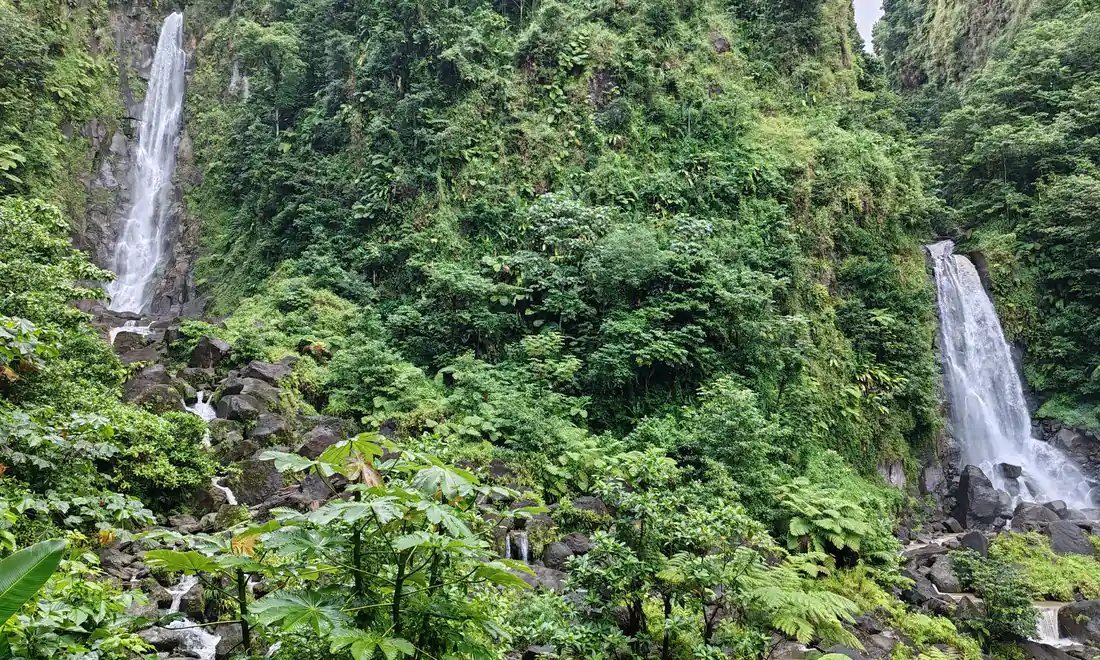
Dominica suits families who want a reliable second passport at the lowest Caribbean price, who do not need the UK or a US E-2 visa, and who are comfortable with nature rather than resorts. It suits less well those whose plan depends entirely on visa-free Europe after 2028. For families who need long-term life in Europe, I usually suggest pairing it with a European residence permit. The comparison guide shows how Dominica stands against St Kitts, Grenada, Antigua and St Lucia.
Questions and answers
Is Dominica the cheapest Caribbean passport?
Yes, by the published minimum. The EDF contribution for one person is $200,000, compared with $230,000 in Antigua and Barbuda, $235,000 in Grenada and $250,000 in St Kitts and Nevis, according to BRIDGES data for 2026.
Do I have to visit Dominica?
Not for the application: the CBIU says you do not need to travel, and the interview is usually online. After citizenship, the government announced in August 2026 that new citizens will have to spend at least 30 days in Dominica within five years. The start date is not yet published.
How long does it take?
The CBIU says approval in principle generally takes at least three months after submission. BRIDGES plans 8 to 10 months from the start of document collection to the passport in 2026, because due diligence has become longer.
Can I keep my current citizenship?
Yes. Dominica allows dual citizenship and does not require you to give up your other passport.
Sources
- CBIU Dominica: investment options
- CBIU Dominica: frequently asked questions
- CBIU Dominica: 2026 Application Process Guide (PDF)
- Government of Dominica: Budget Address, 4 August 2026 (PDF)
- BRIDGES: Dominica citizenship by investment
Checked on 25 October 2026. Rules and fees change, so confirm them with the official sources before you file anything.